
It’s a few days into the new year.
I’m sitting by a pool in Sri Lanka with a couple of friends.
No plans. No schedule.
Someone says, “We should do a yearly review.”
Everyone opened their laptops and got started.
Photos were opened.
Calendars were scrolled.
Old messages, trips, and half-forgotten moments resurfaced.
For a brief moment, the energy is high.
Then, about ten minutes in, it slows.
Postponed.
Interrupted.
Abandoned.
What stuck with me wasn’t that people gave up.
It was how predictable it felt.
Everyone likes the idea of a year-end review.
Very few actually finish one.
And the reason isn’t what most people think.
I’ll share the prompts and system I use later in this article.
The real reason year reviews fail
Reconstructing a year from memory is brutal.
A proper year review asks you to do three hard things at once:
- Remember an entire year
- Make sense of it all at once
- Decide what actually mattered
That’s a heavy cognitive load.
So people postpone it.
And then they abandon it.
If you didn’t journal, you’re not stuck
You can still do a meaningful year review.
Open your photo gallery.
Open your calendar.
Scroll week by week.
Trips will stand out.
Major events will surface.
This works.
But it comes with friction.
You’re reconstructing instead of reviewing.
It’s like trying to understand what happened by interviewing witnesses,
instead of watching the security footage.
Reconstruction is slow, fuzzy, and mentally expensive.
What actually makes year reviews easy
The easiest year reviews are not done at the end of the year.
They’re assembled quietly throughout it.
The closest thing to an honest year review is small snapshots captured in real time, before you forget why things mattered.
My journaling rule (and why it works)
I’ve journaled consistently for three years for one reason:
I removed effort.
Every day I make sure these three things are filled:
- Three photos
- One short summary
- A day rating
Nothing else is needed.
This is the bare minimum that delivers the highest return.
The 80/20 of journaling, in practice.
No essays.
No pressure to be profound.
At the end of each week, I don’t reread everything.
My weekly note automatically pulls in:
- All daily summaries
- All photos
- The day ratings
I scroll through a single table, pick the three images that best capture the week, write a short summary, and move on.
That's it.
The work is small, contained, and finished while the week is still fresh.
And I don’t just get one review at the end of the year.
I get fifty-two chances to check whether my ship is still heading in the right direction.
What this changes at the end of the year
When the year ends, I don’t struggle to remember it.
I review it.
I create a note called “2025 — Year in Review”, and it automatically pulls in all my weekly notes.
Fifty-two rows.
Each with images, summaries, and ratings.
Instead of trying to remember an entire year, make sense of it all at once, and decide what mattered after the fact, the work is already done.
I scroll.
Patterns emerge.
The story is obvious.
My yearly review takes about an hour,
because fifty-two past versions of myself already carried the weight.
Why next year’s review can be completely different
Here’s the part most people miss:
Your first proper year review is always the hardest.
Every one after that gets:
- Faster
- Clearer
- More rewarding
It will feel as addictive as scrolling through social media.
For once, a healthy doom-scroll.
The prompts I use (free)
I answer prompts only after reviewing the year week by week.
The order matters.
The prompts don’t help you remember the year.
They help you make sense of it.
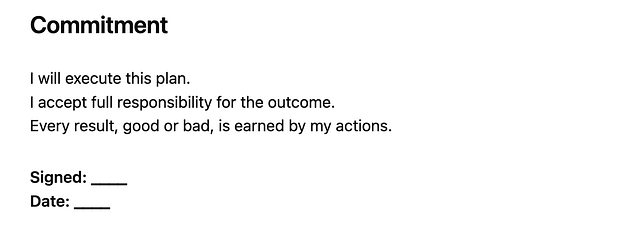
Download the exact Year Review & Year Start prompts I use. Free.
Want the system that makes this effortless?
Physical notebooks get lost.
Word files get buried.
Notion turns into clutter.
Obsidian is the only reason I stayed consistent.
It connects your notes and makes reviewing effortless.
I built a complete journaling setup for Obsidian:
- Daily note template
- Automatic weekly, monthly, and yearly roll-ups
- Zero maintenance
You open it.
You fill it in.
The system does the work of connecting everything for you.
Don’t wait for January
Today disappears regardless.
Future-you either gets clarity
or gaps.
Start today.


Responses